On the crucial importance of doing and making
Last December, I took a leap and joined the team at a new camera store in Lafayette, working every day in a creative space for the first time. As we shot, scanned, cleaned, and sold photography supplies of every description, one of the quotes driven into my brain like a spike was my boss David saying, “less thinking, more doing.”
As an artist, this rankled me for a reason I couldn’t quite put my finger on. But upon further reflection, I realized I bridled at the thought because it went against my basic life-defining ethos: to think of a plan.
Being intellectual has been one of the characteristic cornerstones I’ve built my identity around. Thinking through algebraic equations and essay prompts in school, pondering some tantalizingly obscure thought experiment with friends—if you name it, I probably love to think about it.
And while I might enjoy a good think more than most, I know this want to fully flesh out an idea is a common practice when approaching, well, just about anything life throws at you. It’s scary to jump into the unknown without a path forward firmly fixed in your mind. Especially as an artist. With everything available to you all at once, the endless possibilities are easy to drown in. I know I have, plenty of times.
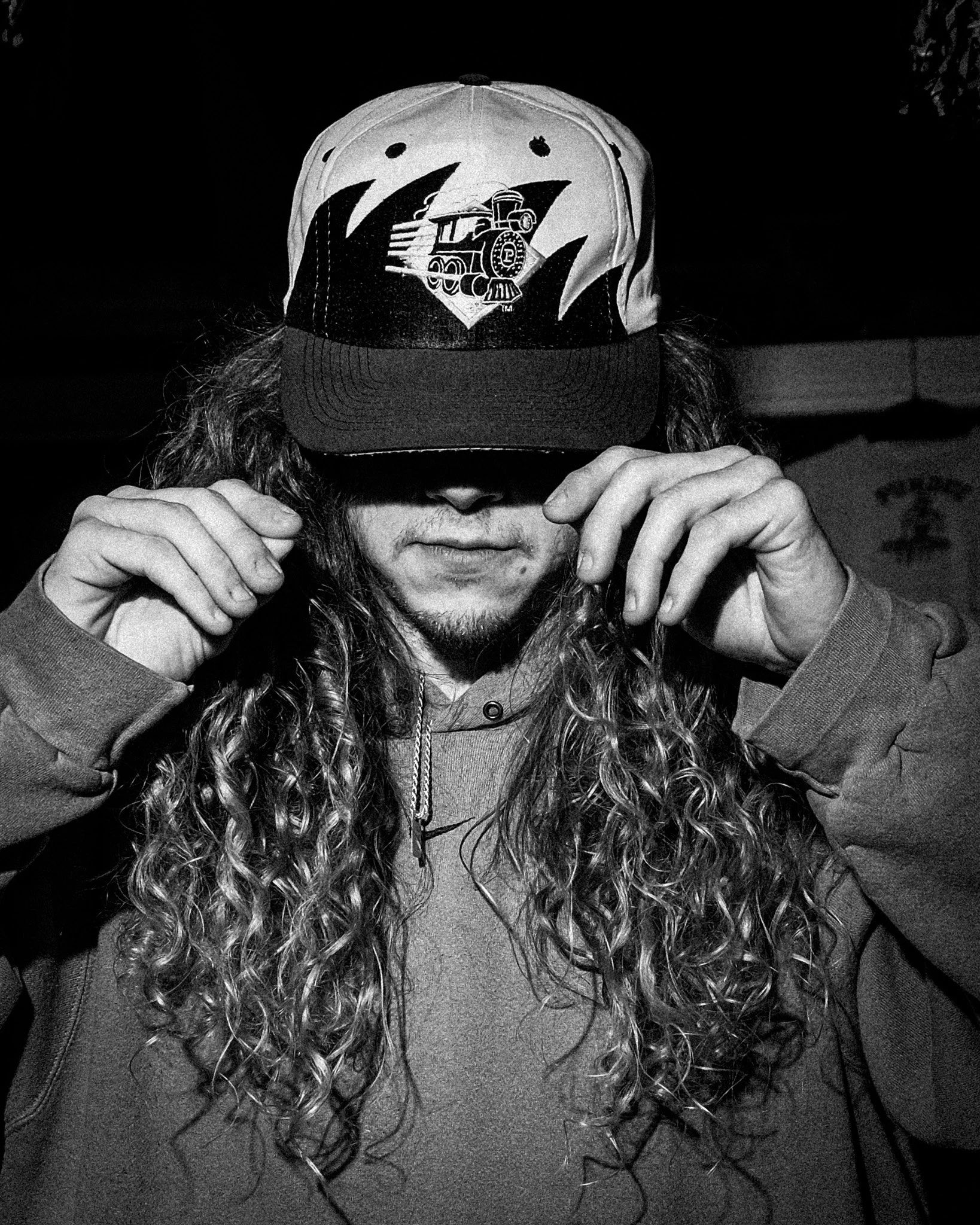
This portrait of Rags to Riches co-owner Cody Easter was shot on a whim one day while I was in downtown Lafayette with time to kill. I’m trying to teach myself more about flash photography, and learning by doing is my current method of getting better!
But throughout this first year post-college as a creative, I think more and more that my boss’s advice is a creative superpower to steer into—made clear with a few sage words from the maestro Rick Rubin himself.
In his book “The Creative Act,” Rubin speaks about how he believes that every human is creative by nature and acts as a vessel to bring ideas into being. Rubin further elaborates how the inspiration for artistic ideas, often coming in random moments are gifts from the universe and that acting upon those ideas immediately is of paramount importance. Because often if the idea is allowed to leave, it cannot be recaptured again.
I’ve come back to Rubin’s ideas often in recent months. As a consummate thinker who takes time to examine all potential outcomes of a situation, I realized that all this thinking was stopping me from the most important aspect of making art: actually making it.
Because thinking takes time and effort, time and effort that could have been spent just simply trying to make something interesting. And probably failing, but there’s another whole essay on why failure is so incredible and we should chase it more often.
Inside of all of this, there’s a lost art in finding the beauty of doing for the sake of doing, without any sort of ulterior motive or incentive.
Bottom line, we need to just “do” more.
As a new convert to this philosophy myself, it’s a foreign concept to let go of the pressure of making good art. I’m a self-proclaimed overthinking perfectionist, and so the ideas of “good” and “great” have stopped my many times from even attempting to branch out into something totally new.
But never has it been more apparent to me that doing is the true essence of art. One of my greatest worries when watching the cycles of the creative world currently is that it’s simply too easy to create technically perfect art. With AI engines getting smarter every day, many digital art disciplines are being diluted with senseless AI slop that fills social media feeds and Google searches. Frankly the volume is staggering, and it’s all accomplished with a few deft keystrokes.
I’m definitely not anti-AI, not by any stretch. Some of the generative functions and subject identification in Adobe products are without parallel, and the AI-assisted editing powers of video software like CapCut are lowering the barrier of entry into creation more than ever. Which is amazing! Everybody should have the chance to try their hand at digital creation. I’m even teaching myself new graphic design workflows by having Claude explain how to create certain effects on designs I like, which I then go and play with in Photoshop.
But the ease is what scares me.
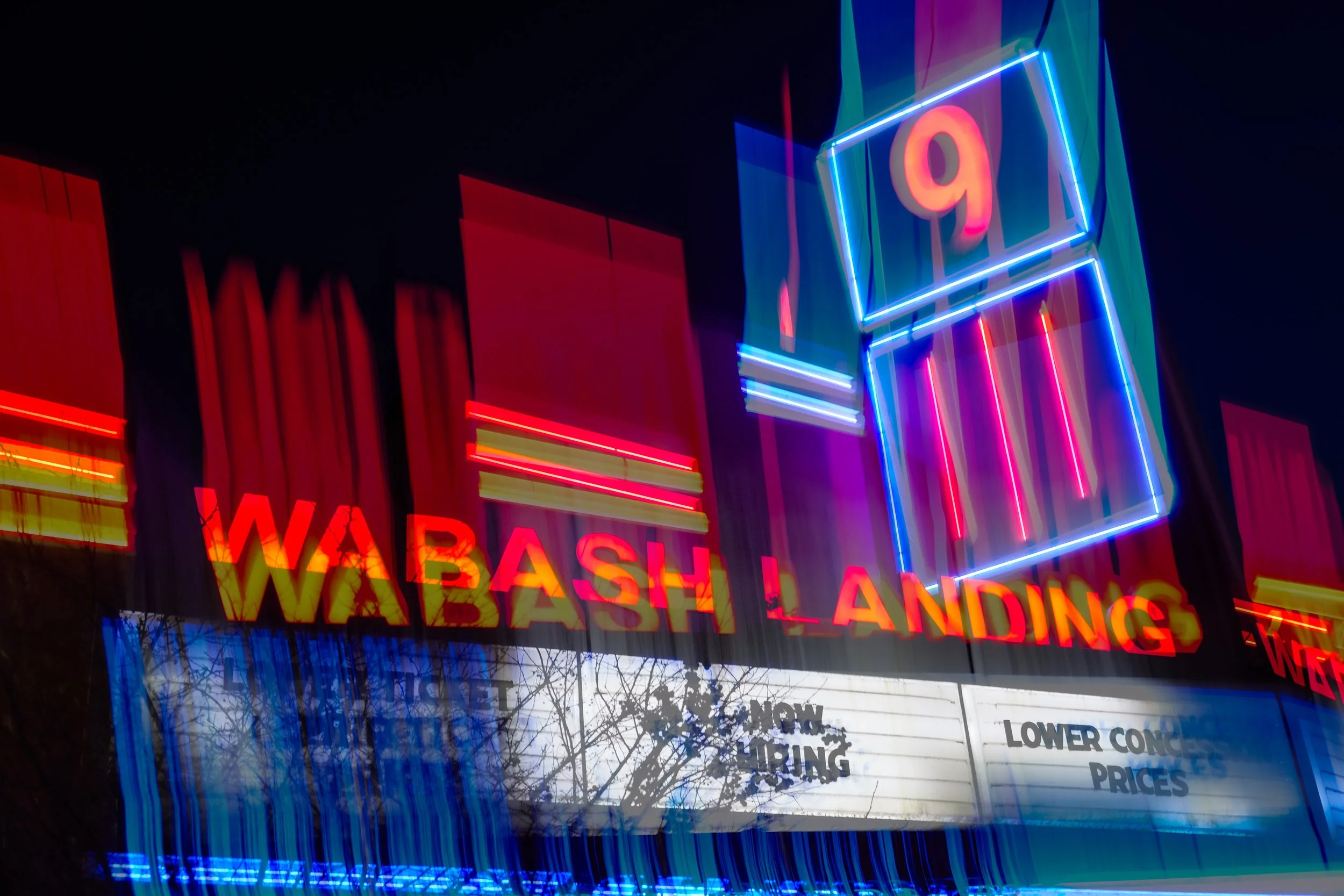
This double exposure of the Wabash Landing 9 was shot in a 45-minute session I did before a date earlier in 2026. I’d been seeing a lot of double exposures on Instagram and wanted to start producing some of my own!
Somewhere along the line, the art viewing lens shifted the focus towards finished products and not about the discovery along the way. In no way is this shift revolutionary, and this is neither the first nor the last time it will do so.
But the view of art as a hustle, somehow an easy way to make money is making it all the harder for those of us committed to the process of learning and making mistakes. If AI can produce an okay graphic or photo or painting based on a style that already exists, how are new artists supposed to have space to make mistakes, make bad art and still grow?
The answer, like so many artists have echoed across millennia, is that the true fulfillment is in the making. It seems so trite, but with the process becoming so frighteningly streamlined in the 21st century, it’s only solidified for me how important it is to commit to the process of making. The beauty really is in the struggle.
And as cliché as it sounds, I don’t think it really sunk home for people just how essential the process was until AI has threatened to take it completely away—all for the sake of convenience.
It’s why film photography is seeing such a meteoric re-emergence. People are connecting with the physical process of having an image indelibly stamped onto a physical piece of media and having to work to extract that photo. I developed my first 3 rolls of film ever this past weekend with my friend and fellow photographer Emmanuel Nava (@enava_fotos on Instagram, go give him a follow!). The meaning behind the photos comes from the following of meticulous directions and the satisfaction seeing the final product come out developed perfectly is so sweet.
What I have found through my own practice—and the words of Rick Rubin—is that my brain is a wonderful generator of ideas throughout the day. And to deny those ideas is to kill a chance of something beautiful to come into the world, which I definitely don’t want to do. Denial comes in the form of phrases like “I’m too tired” or “I’ve already had a long day,” even the dreaded “It probably wouldn’t be that good anyway.”
I’ve committed to destroying this denial at every turn. Because all too often, spur-of-the-moment ideas have turned into some of my favorite photos of the past year. Simply being aware of these thoughts that detract from my artistic flow seems to make it easier to shake off their crippling effect and to drum up the courage to simply go and do.
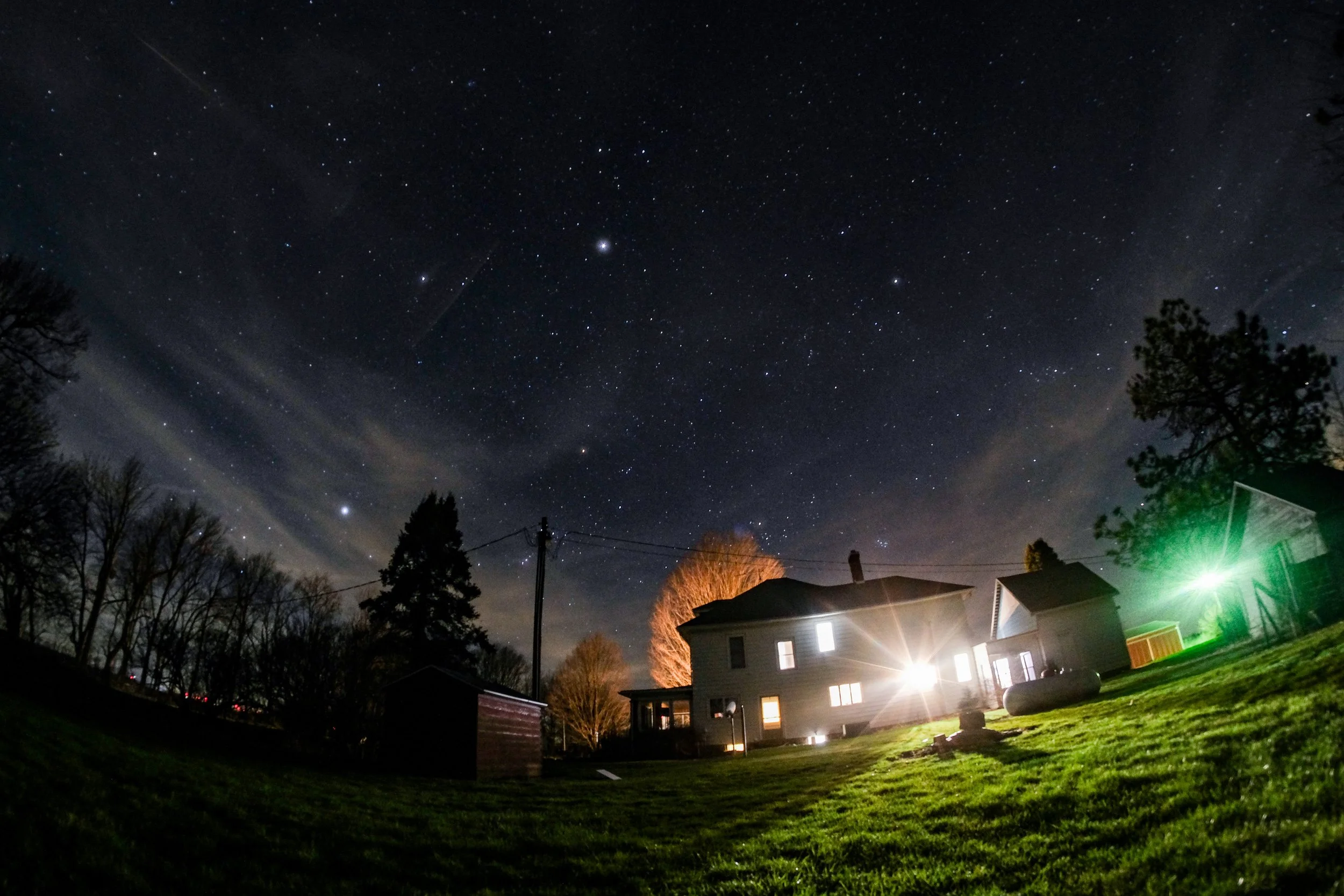
This is one of the astrophotography shots I took of my house several months back! I still need to work on some interior lighting issues, but I love the effect of the fisheye on the night sky.
Take this late-night long exposure of my house to the right. We had just gotten home from some event late at night and I was all ready to tuck into bed and go to sleep. But the twinkle of the clear, crisp night sky sparked a need for a photo. So, I ran inside, grabbed my Fujifilm camera and a fisheye and parked myself in the grass, content to try and capture the rhythms of the universe. I’m extremely pleased with how they turned out.
I’m by no means perfect at this, but fighting the urge to stop and think against just doing something has been extremely freeing. It’s a joyous liberation from the constraints of needing to make make something great. In many cases, it will even be bad. But all the bad photos are just stepping stones towards better ones. I firmly believe that.
Keep on doing, and enjoy the process while you’re at it!
